Diné/Navajo (Arizona)Group Mission Trips


- Discover Navajo culture: Experience life among the Navajo Nation in Arizona and learn about their history and traditions.
- Serve the community: Work with Navajo pastors and community members on home repair projects, Kids Club, or church outreach programs.
- Experience cross-cultural ministry: Build relationships and learn from the Diné (Navajo) in a unique setting.


Details & Logistics
 Registration & Payment
EM FAQ
Available Trip Dates
Local Partners

Activities & Opportunities
By serving in the Diné Nation (Navajo Nation), you can genuinely impact the lives of others. You have the unique opportunity to live and work among the Diné (Navajo). You will partner with the local churches and practically serve people in the surrounding areas by meeting real needs in tangible ways. If you come with a genuine heart to connect with people, you will build meaningful relationships and encourage those around you as you become a picture of God's love.
Work Projects
Your team will participate in practical work projects in support of the local church that is hosting your team. This primarily consists of construction-related projects such as tiling, drywalling, roofing, framing, cement work, and various kinds of repairs/remodeling. Depending on the needs of a given week, your team's projects will focus on helping local families or working on projects that serve the local church. We ask that you come with a willing heart that is prepared to work to the best of your ability. Specific construction skills are not required; however, it is very helpful to have adult team members with some basic construction knowledge to work alongside your team and provide additional guidance and support throughout the workday. Because the Diné (Navajo) are spread out over a large space, you should expect to drive as much as 30-60 minutes to your worksites. We think you'll enjoy the beautiful desert scenery that surrounds you, whether driving, working, or simply enjoying time at church.
Outreach Ministry
Due to the unique nature of this community, the opportunity for relational ministry may take place directly at your team's worksite as you come alongside and encourage those you have come to serve. There may be additional opportunities to serve in various types of people ministry if the need arises. These types of ministry could include things like visiting the elderly, gardening, cleaning, etc.
Children's Ministry
In this community, your team may have the option to invest in the local children through leading a 2-4-day Kids Club. *Kids Club is a popular activity with teams. To best serve the needs of the local kids and to maintain consistency, we feel it is optimal for 1 team to lead the entire week of Kids Club. In light of this, we will offer the leadership of Kids Club to 1 team each week. It is offered on a first-come, first-served basis to teams in the order of their registration for the trip. Leading Kids Club is an important outreach ministry. We ask teams that request participation in this ministry to embrace that responsibility and come well-prepared for their role in leading Kids Club. If your team has a strong desire to work with children, please contact us early on to see if this ministry opportunity is still available. Your team must be registered for the trip to be assigned Kids Club.
Kids Club is assigned to one team per week and normally lasts between 90 minutes and 2 hours. It will take place either during the late morning or early afternoon depending on the needs of the community. We typically have 2-8 children between the ages of 2 and 12 who attend and will need a maximum of 2-4 people to lead Kids Club each day. If your team has the opportunity to participate in Kids Club, Experience Mission will provide the curriculum for your team's use. This Kids Club curriculum will be sent out to Team Leaders in the spring via email.
Teams will be responsible for bringing the craft supplies needed for their specific crafts and should budget appropriately. While we do our best to make sure the craft materials are cost-effective, teams may feel free to augment any materials to make them more suitable for their budget. Experience Mission will supply scissors, staplers, and paper hole punches. There are plenty of opportunities to connect with local children through games like soccer or Frisbee. Tuck in a hackysack, football, or jump rope as they are sure to come in handy.
*Due to varying school schedules, Kids Club is not offered during our off-season months of September - May.
*Experience Mission works closely with local leaders to identify work projects and ministry opportunities that address authentic needs within the community. We ask that you come with a servant's heart and willingness to adapt to the unique qualities represented in each location. Opportunities can vary significantly from one week to the next. Your team may work at one location or serve at multiple locations each day. Due to the changing needs of our community partners, we cannot confirm your specific activities until your team arrives.Spring Break Trips
Due to staffing limitations and varying school schedules in our community locations, Kids Club and Evening Gathering are not offered during spring break trips. Teams should plan to prepare their own worship and devotional materials for trips from February-May.
NOTE: Spring trips require a minimum team size of 20 participants, and cost $100 more than Summer trips to cover off-season staffing.
Community Profile
The Diné (also known as Navajo) are a people of deep roots, strong traditions, and remarkable endurance. Their homeland, Diné Bikéyah, lies in the American Southwest, and the Navajo Nation is the largest reservation of any Native American tribe in the United States. It covers roughly 27,000 square miles across Arizona, New Mexico, and Utah, slightly larger than West Virginia. In 2020, about 399,000 people were enrolled as tribal members, making the Navajo Nation the largest tribe in the country by enrollment. About 165,000 people live within the reservation’s boundaries. The Diné have kept their language, ceremonies, and identity through centuries of change.
A Sovereign Nation
The Navajo Nation governs itself with executive, legislative, and judicial branches, and its capital is Window Rock, Arizona. The Navajo Nation Council has 24 delegates who represent the Nation’s 110 chapters, the local communities where much of Diné civic life takes place. In 2009, Diné voters chose to reduce the council from 88 delegates to 24, and the change took effect in 2011. The Nation has its own laws, courts, and police department. Most reservation land is held in trust by the federal government for the Nation, and families generally hold use rights or lease parcels for homes, businesses, and churches.
The Land
Diné Bikéyah is a landscape of high desert, mesas, canyons, and mountains, with elevations generally between 5,000 and 7,000 feet. Summers are hot and winters can bring snow and ice. The land holds places of great beauty and history, including Canyon de Chelly, Monument Valley, Navajo National Monument (Betatakin), and Chaco Canyon, as well as Four Corners Monument and the Bisti Badlands. For the Diné, this land is not only home but a sacred landscape, and it remains central to identity and ceremony.
Daily Life
Many Diné families live in homes or compounds spread across the reservation, often close to extended family and to the land they have worked for generations. Many still herd sheep and farm, and others work in skilled trades, education, health care, government, or in nearby cities. Some families live in contemporary homes, some in traditional hogans, and in Canyon de Chelly some households continue practices that have been followed for generations. Internet and mobile phone use is growing, though service can be unreliable.
Challenges and Community Strength
Limited economic development has left unemployment high on the reservation, and some households still lack electricity or running water. Many homes, including older mobile homes, are in poor repair and need improvement. Many elders speak primarily Diné bizaad, and some live alone with limited support nearby. Caring for elders is a deep value in Diné culture, and communities, families, chapters, and many organizations continue to work to meet these needs.
Language
Diné bizaad is a living language and one of the most widely spoken Native languages in the United States. It belongs to the Athabaskan language family, whose languages are spoken from Alaska and western Canada to the Southwest. It is tonal and complex, and its vocabulary is richly descriptive. The word for airplane, for example, describes a vehicle that flies. Although the language was traditionally oral, it was written down in the twentieth century and is now used in print, including translations of the Bible.
Diné bizaad also played a historic role in World War II. Navajo Code Talkers used it to send secret messages for the U.S. Marines in the Pacific, and the code was never broken by Japanese forces. Their service remains a source of pride and a symbol of how Diné culture has protected and strengthened others.
Spiritual Life
Traditional Diné spirituality does not separate daily life from religion. Diné teachings explain the origins and structure of the world and center on the Diyin Diné’é, the Holy People, who are understood to be present in the world. Hatałłii, or singers, lead ceremonies that restore balance and health, a practice that reflects a deep concern for the wellbeing of people and the world. Many Diné also practice Christianity or the Native American Church, and some combine traditions. Many see their traditional teachings as the foundation of Diné identity and sovereignty.
History
Diné teachings hold that the people emerged in this land. Archaeologists and linguists generally trace the ancestors of the Diné to northern North America, with migration to the Southwest several hundred years ago. Hogans, traditional homes built from logs and earth, are of deep ceremonial importance. Hunting was once central to survival, and farming and herding grew in importance over time. By the nineteenth century, sheepherding was a core part of Diné life.
During the Civil War, the Diné were caught in a long cycle of raiding and retaliation involving neighboring Spanish/Mexican and Anglo settlers, other tribes, and the U.S. Army. General James Carleton took command in New Mexico in 1862 and set out to end the conflict by force. He planned to remove the Diné from their homeland and confine them at Bosque Redondo near Fort Sumner, and he ordered Colonel Kit Carson to carry out the campaign. For months, the Diné resisted and evaded capture, and by November 1863 Carson had sent only about 200 people to Bosque Redondo.
In January 1864, troops entered Canyon de Chelly, a Diné stronghold. They destroyed crops, orchards, homes, and food stores, took or destroyed livestock, and, according to some accounts, fouled water sources. The aim was to starve people into surrender. What followed is one of the darkest chapters in Diné history.
Facing hunger and a harsh winter, many Diné surrendered at army posts, including Fort Defiance. Supplies soon ran short, and groups of captives were sent on forced marches to Bosque Redondo. This became known as the Long Walk. It was a series of marches made in groups over several months, covering more than 300 miles. Estimates of how many Diné were held at Bosque Redondo range from roughly 8,000 to more than 11,000, depending on the source. Many were forced to walk through snow and cold with too few wagons and too little food and clothing. One account estimates that several hundred people died on the march and close to 2,000 more at Bosque Redondo, and estimates vary. Some Diné avoided capture altogether by finding refuge in remote places.
Bosque Redondo was a place of great suffering. There was little farmland and little firewood, crops failed repeatedly, and hunger and disease spread. The Diné also shared the site with Mescalero Apache, who had been confined there as well. Even the army eventually judged the project a failure. Through these four years, the Diné held onto their culture, their families, and their determination to return home. They refused to plant crops again at Bosque Redondo.
In 1868, Diné leaders, including Barboncito, who served as the main representative, and Manuelito, negotiated with General William T. Sherman and Samuel Tappan. They insisted on returning to their homeland rather than being moved elsewhere, such as Indian Territory, and they succeeded. The Treaty of 1868, signed on June 1, recognized the Navajo as a sovereign nation and established a reservation, though it covered only part of their original homeland. The treaty promised seeds, tools, and livestock, and required Navajo children to attend government schools, which meant removing them from their homes and communities. Diné oral tradition also credits women, as well as men, with the success of the negotiations. The Diné know the treaty as Naaltsoos Sání, the Old Paper. The reservation has since been enlarged and now extends into Utah.
After returning home, the Diné rebuilt their herds, restored their farms and communities, and expanded trade in wool and weaving through trading posts. One source reports that the population grew from about 9,000 in 1868 to about 21,000 in 1900. The years that followed were not easy, and later federal policies, such as livestock reduction in the 1930s, caused further hardship. But the Diné endured, and the Long Walk is remembered and commemorated today as both a deep wound and a testament to survival.
Work, Art, and Culture
Herding and farming remain part of the economy, and many Diné work in education, health care, government, trades, and business. Coal and uranium have been mined on the reservation and became part of the economy, though uranium mining also left lasting health and environmental harm in some communities. Weaving, pottery, and jewelry are celebrated Diné art forms, and for many families they are both an expression of cultural identity and an important source of income, especially with the growth of tourism.
Culture and Language Today
The Diné have adopted many modern technologies and institutions while holding onto their identity. For a time, many Diné children were sent to boarding schools away from their families, where they were often punished for speaking Diné bizaad, which contributed to language loss. Today, Diné families, educators, and the Navajo Nation itself are working to teach the language and culture to new generations. Younger people speak Diné bizaad less than older generations do, so revitalization remains an important priority, and it is one that the Diné are leading.
Typical Schedule
Typical Schedule
Each morning, there is time set aside for devotions and quiet time. This is a valuable time and we strongly encourage everyone to spend it with God journaling their thoughts and experiences as the days unfold. EM will provide a physical or printable devotional journal.
When time and evening activities allow, our staff will lead a short time of debriefing and a short devotional in the evening (what we call "Team Gathering"). This may also take place in the morning before you start the day. Our programming does not include musical worship, as we can't guarantee that our staff will have this ability. If your team would like to share some songs for worship, that would be welcome. Please let us know if you have anyone who sings or plays guitar on your trip so that we can help to coordinate the musical aspect of worship when able. If teams aren't able to help in the area of music, it may not be a part of the trip.
Due to staffing limitations, Evening Gathering will not be offered during our off-season months of September - May. You are free to lead your team in a time of worship and devotions of your choosing in place of Evening Gathering.
Day 1
3:00-6:00 pm Groups Arrive
5:00 - Leader's Meeting
6:00 - Dinner
7:00 - Orientation Meeting
8:30 - Team Time (a time for your group alone)
11:00 - Lights Out
Day 2-5
7:15 - Breakfast
7:45 - Devotions and Quiet Time
8:15 - Group Prayer
8:30 - Teams leave for Sites
12:00 - Lunch
3:30 - Finish Work for the day
4:00 - Break and Clean-up
5:00 - Leaders meeting
6:00 - Dinner
7:00 - Evening gathering (as a whole group, when time allows)
9:30 - Team time
Day 6
7:00 - Breakfast
7:30 - Cleanup/Packing
9:00 - Pictures and Good-Byes
Lodging, Food & Transportation
Sleeping
You will be staying at a local church in Arizona. Your team will be sleeping on hard floors; EM will provide air mattresses. Please bring your own bedding. It can be cool at night, so a sheet and a sleeping bag are recommended. Teams should plan to share housing with additional teams who may be serving during the same week. Housing is generally not divided by gender, but smaller private spaces are available for changing clothes.
Showers
There are no showers in the church. You will be using rustic, outdoor shower stalls. Please bring a bathing suit. During spring trips, it may be too cold to shower, so wet wipes are recommended.
Bathrooms
The only toilets available will be outhouses.
Water
There is no running water; however, fresh drinking water will be made available in coolers.
Electricity
There will be electricity at the church.
Food
Experience Mission staff will prepare your meals each day. The menu includes an ample selection of tasty food! Curious about EM's ability to accommodate specific food restrictions? View EM's Food Policy
Transportation
Your teams transportation to, from and while in the Navajo Reservation is not covered. You will need your vehicles throughout the entire week to transport your team to various locations for work and ministry.
For teams traveling to our Western Navajo communities it is important to note that while The Navajo Nation DOES observe Daylight Savings time, the state of Arizona DOES NOT. During the months when Daylight Savings time is observed there is a 1 hour time difference between the Navajo Nation and the state of Arizona.*Teams arriving from Phoenix or Flagstaff should expect to lose an hour during travel to Black Mesa.
Using a school bus as your main mode of transportation while in this community is not an option. Our work on the Navajo Reservation can only accommodate standard 15 passenger vans or smaller.
Navajo Trip FAQs
What age group can you accommodate on trips to the Navajo Nation in Arizona?
We can accommodate jr. high and middle school students in this location as well as high school students and adults. We can also accommodate families with younger children ages 9 and up. We do not provide kids specific projects or activities for younger children and younger children must be under the care of their parents at all times.
Can middle school students go on this trip?
Yes! EM's local ministry partners in Arizona welcome students from 6th grade and up. Middle school teams need at least 1 adult leader for every 5 students. Compare all middle school mission trips to find the right fit for your group.
How much do Navajo mission trips to Arizona cost?
See "Upcoming Trip Dates" section below for available dates and per-person cost for each trip. This fee covers ground transportation, lodging, all of your meals, and trip-related expenses.
What seasons do you offer Navajo mission trips?
Due to limited staff availability, mission trips to Arizona are only available during the summer. Check out this list of all available spring break mission trips if you are looking for trips outside the summer months.
Do you offer spring break trips in Arizona?
We typically offer custom Spring Break Trips to Arizona for teams of 20 or more. Prices for Spring Break Trips are higher than summer trips. Kids Club and a formal Evening Gathering Programs are not offered during off-season trips. Check out this list of all available spring mission trip locations for more options.
What will volunteers do on a Navajo mission Trip?
Ministry on the western side of the Navajo Reservation has a few focuses. Teams can expect to work on home or church improvements with local families and lead a Kids Club through the local church.
Will we work with children on the Navajo Reservation?
Most likely, yes! Kids Club is an important piece of the outreach focus in Arizona.
What paperwork is required for this mission trip?
Each team member will need to fill out a team member registration form and liability waiver, and all adults are required to pass a background check. Your mission trip support representative will contact you if any other paperwork is required.
Where will my team stay in Arizona?
Teams will stay at a church on the Navajo Reservation. Lodging is arranged all together in the church sanctuary. We do not have separate rooms for guys and girls but do provide smaller rooms for private changing. Plan to bring along air mattresses, sleeping bags, and pillows for comfort. The nights get chilly, so you'll want a warm sleeping bag.
Will there be showers?
You can expect rustic, outdoor shower stalls. Water is limited and solar heated.
Will there be electricity?
Yes! There will be electricity available at the church where you stay.
Yes! Meals will be provided by Experience Mission staff for the duration of your trip. Our mission trip food policy outlines the details of what we can accommodate for dietary restrictions and more. Team members should plan on bringing their own plates, bowls, cups, and utensils. For trash purposes, we ask teams not to bring disposable dinnerware or water bottles.
How does transportation work during Navajo mission trips to Arizona?
Transportation is entirely up to groups to arrange. We recommend 15 passenger vans or smaller. We don't recommend relying on buses as a mode of transportation for this trip. Keep in mind that groups are often split into teams of 7-10 for construction projects and projects might be located on rough dirt roads. It works well if you are able to plan transportation accordingly.
When should I arrive?
Check-in is between 3 and 5 PM on the first day of your selected trip. Our staff will be awaiting your arrival. You can expect dinner and an orientation meeting that evening as well.
What should I pack for a Navajo mission trip?
A packing list will be available in your portal once you register for the trip. Generally, be prepared to bring along work clothes. All tools will be provided to you, but donations of additional tools are welcome!
Does EM offer any similar mission trips?
Yes! Navajo Nation is one of EM's 5 rural mission trip communities. Compare them on the rural and Native American mission trips page.
Have more questions about Experience Mission trips? Check out our general FAQs, or call our support team at 888-475-6414.
Upcoming Trip Dates:
Diné/Navajo (Arizona)
Mission Trip Resources
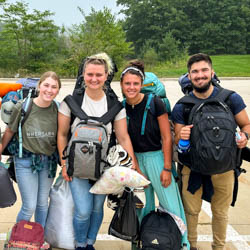
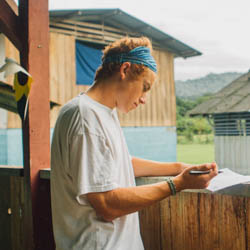
Hear from recent EM mission
trip team leaders!
Hear from recent EM mission trip team leaders!
Carline D. served in Savannah, Georgia
Nikki K. served in Pikeville, Kentucky
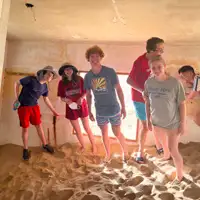
Christopher G. served in Rincon, Puerto Rico
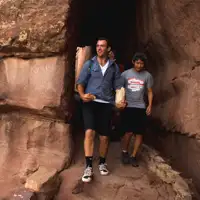
Jeremy M. served among the Navajo Nation in Arizona
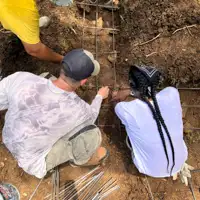
Jennifer S. served in Rincon, Puerto Rico

What’s the best trip for your group? Answer 5 multiple choice questions and get instant mission trip recommendations!
What’s the best trip for your group?
Answer 5 multiple choice questions, and get instant mission trip recommendations!


Site developed and hosted by Skycog, Inc.