Disaster Recovery Volunteer Guide: How to Help After a Disaster
Updated: October 2026
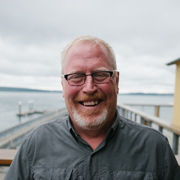 Chris Clum
Founder/Executive Director, Experience Mission
Chris Clum is the founder of Experience Mission, drawing on more than four decades of experience developing service-learning mission trips and working with local ministry partners. This article reflects Experience Mission's organizational approach to service-learning mission trips and was reviewed by the Experience Mission leadership team.
Chris Clum
Founder/Executive Director, Experience Mission
Chris Clum is the founder of Experience Mission, drawing on more than four decades of experience developing service-learning mission trips and working with local ministry partners. This article reflects Experience Mission's organizational approach to service-learning mission trips and was reviewed by the Experience Mission leadership team.
To help after a disaster, volunteer through a recognized recovery organization rather than traveling in on your own. Wait until a project is ready for volunteers, then arrive prepared to listen, adjust, and follow local direction. The most useful help is coordinated and locally led, and it is needed for months and years after a disaster, not only in the first week.
When a disaster strikes, wanting to help is natural.
We see families displaced, homes damaged, neighborhoods flooded or burned, and communities facing enormous loss. We may have time, energy, construction skills, a church group, a student team, or simply a willingness to work, and we want to do something useful.
That willingness matters. Volunteers can play an important role in disaster recovery. But good intentions alone do not guarantee helpful service.
Over the years, we have learned that wanting to help is only the beginning. Volunteers are most useful when they come through trusted local relationships, respond to work the community has actually identified, and arrive ready to listen and adjust. The community, not the volunteer, is at the center of recovery.
This guide explains what to expect and how to help responsibly.
Should I Volunteer Immediately After a Disaster?
Typically, it's best to not travel into a disaster area on your own. Immediately after a major event, roads may be blocked, utilities may be down, emergency crews may be conducting search and rescue, fuel and lodging may be scarce, and affected communities may still be determining what they need.
National VOAD and emergency-management organizations emphasize coordinated volunteering rather than going it on your own. If you want to help right away, register with a recognized disaster-response organization and wait for instructions about where and how volunteers are needed.
There will often be opportunities later, and those later opportunities can be just as important.
What Kinds of Work Do Disaster Volunteers Do?
Volunteer work changes as recovery progresses.
Early cleanup may include:
- Removing debris
- Clearing fallen trees and brush
- Mucking out flooded homes
- Removing damaged drywall, flooring, insulation, and belongings
- Tarping roofs
- Cleaning and sanitizing
- Assisting with distribution or community support when requested
Longer-term recovery may include:
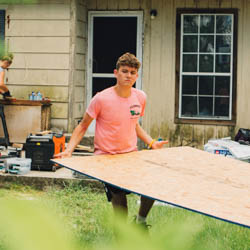
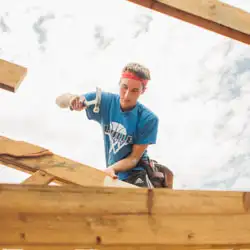
- Framing
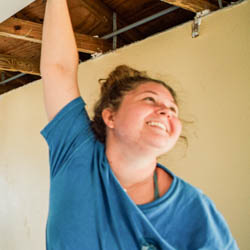
- Drywall installation and finishing
- Painting
- Flooring
- Roofing
- Siding
- Insulation
- Accessibility improvements
- Landscaping and property cleanup
- General home repair
- Complete or partial home rebuilding
You may also be able to contribute through other skills, like administration, hospitality, logistics, meals, case-management support, communications, transportation, warehousing, or professional expertise.
Do I Need Construction Experience?
Not always. A willing beginner can be useful! Many disaster-recovery projects include work that can be done by volunteers with limited experience when given appropriate supervision and training.
Skilled volunteers, however, are especially valuable during rebuilding. Carpenters, electricians, plumbers, roofers, contractors, engineers, equipment operators, and other tradespeople can expand what recovery organizations can accomplish.
Some work requires licenses, specialized training, or professional oversight and should never be attempted simply because a volunteer is willing. A good volunteer organization matches people to work appropriate to their skills.
When Are Volunteers Most Needed?
There is no single best time. Immediately after a disaster, trained response organizations and specialized volunteers may be most useful. As areas become safe and projects are assessed, larger numbers of volunteers may be needed for debris removal, muck-outs, cleanup, and basic repairs. Months later, rebuilding teams and skilled volunteers may become increasingly important.
One of the most important realities of disaster service is that volunteer interest often peaks before many long-term projects are ready. Public attention tends to wane as a disaster stops showing in urgent news stories, which means volunteer help can often dry up just as communities are ready to tackle the projects that could use the most outside help.
Why Should Volunteers Work Through a Coordinating Organization?
A safe and helpful disaster relief project does not appear simply because someone wants to show up and volunteer.
Before a team arrives, someone may need to:
- Confirm that the homeowner wants assistance
- Assess the property
- Identify hazards
- Determine the scope of work
- Secure permits or approvals
- Obtain materials
- Match the project with appropriate volunteers
- Provide tools
- Arrange supervision
- Coordinate lodging and meals
- Communicate with local recovery organizations
FEMA volunteer-management guidance emphasizes identifying appropriate volunteer jobs, determining needed skills, providing training and supervision, and protecting volunteer safety and well-being.
Coordination turns willingness into useful work.
What Should I Expect on a Disaster-Recovery Trip?
Expect the need to be flexibile. Disaster recovery is a changing environment. A project scheduled for your team or group may change because materials are delayed, a permit is not ready, weather changes, another household develops a more urgent need, or local leaders redirect resources.
Your team may arrive expecting to do one thing and end up doing something completely different. That is not a failed trip! In disaster recovery, being willing to adjust to what is actually needed is part of serving well and letting people know you care, regardless of how glamorous the project is.
Volunteers should arrive ready to serve the actual needs of the community rather than expecting the community to provide a particular experience for the volunteer.
Where Do Disaster Volunteers Stay?
Housing varies by community and organization. Teams may stay in churches, volunteer housing facilities, bunkhouses, camps, schools, community centers, retreat facilities, or other temporary accommodations.
Expect living conditions to be simple, with shared spaces, changing schedules, limited privacy, and accommodations shaped by what the recovering community can reasonably provide.
Volunteer housing itself requires local resources, which is another reason organizations cannot always accept an unlimited number of volunteers.
What Should Disaster Volunteers Bring?
Requirements depend on the disaster, worksite, season, and organization. Your coordinating organization should provide a specific packing and safety list.
Common needs may include durable work clothing, closed-toe work boots, work gloves, eye protection, appropriate respiratory protection when required, a refillable water bottle, weather protection, personal medications, toiletries, and bedding when required.
When you come, be ready to wear whatever personal protective equipment (PPE) is required. Floodwater, mold, unstable structures, sharp debris, heat, smoke, contaminated materials, power tools, and other hazards can make disaster worksites significantly different from ordinary volunteer projects.
Is It Safe to Volunteer After a Disaster?
Disaster worksites can contain real hazards. Responsible organizations assess risks, establish worksite procedures, match tasks to volunteer ability, provide appropriate supervision, and communicate required protective equipment.
You must be responsible too! Be sure to follow instructions and use required safety equipment. Don't perform work you aren't trained or capable of doing proficiently. Tell an organizer when something appears or feels unsafe. And look after yourself! Stay hydrated and recognize your physical limitations. It's not helpful to get yourself hurt or put yourself in danger unnecessarily.
Can Families, Youth Groups, and Church Groups Volunteer?
Often, yes, but age requirements and suitable projects vary. Some worksites involve hazards inappropriate for younger volunteers. Other projects can safely involve families, youth groups, schools, congregations, and community organizations.
The coordinating organization should determine appropriate ages and activities for each project. Groups should never assume that a recovering community can accommodate them simply because they are willing to travel.
View All of EM's Disaster Relief & Recovery Trips
Who Decides Which Projects Volunteers Work On?
Ideally, volunteer projects grow from locally identified needs. Homeowners, local organizations, Long-Term Recovery Groups (LTRGs), case managers, emergency managers, churches, nonprofits, and recovery partners may all help identify and develop projects.
Outside volunteer organizations should coordinate with those local structures rather than independently deciding which homes, neighborhoods, or people need help most. Local knowledge matters!
Serving as a Guest, Not a Hero
Disasters create powerful stories, and volunteers naturally want their work to matter. But disaster recovery is not primarily about the volunteer.
People most affected by disasters are homeowners, parents, workers, pastors, business owners, teachers, neighbors, and community leaders. They are already making difficult decisions, caring for one another, and shaping what comes next. Volunteers enter that story; we do not become the center of it.
When we volunteer after a disaster, we have the privilege to gift our time, labor, skills, resources, encouragement, and presence. In doing so, we are also gifted the opportunity to come alongside incredible local people who carry important knowledge, rooted relationships, history, leadership, and a deep understanding of their own community. Healthy service respects both, while recognizing that decisions about the community belong to the people who live there.
At Experience Mission (EM), we ask all disaster relief volunteers to enter a community as guests. We see ourselves as there to learn as well as work, to become neighbors rather than heroes, and to support people who were already caring for their community long before we arrived. We believe all communities are partners to come alongside wherever we can help, not projects to be completed.
That posture changes the question from "What can I accomplish while I am here?" to "What is useful to this community right now?"
What If I Can't Travel?
Travel is only one way to help. Communities may also need financial support, building materials, professional expertise, equipment, transportation resources, volunteer housing support, business partnerships, advocacy, and long-term organizational partnerships.
But be careful about sending material items that aren't being asked for. Unrequested donations can create storage and transportation problems. So, always verify what is actually needed in a community first. Sometimes the most useful contribution is funding the organizations and people on the ground already doing the work.
How Do I Find a Responsible Volunteer Opportunity?
Look for opportunities connected to recognized recovery organizations, local recovery structures, State or Territory VOADs, Long-Term Recovery Groups, established nonprofits, or other trusted partners.
Ask these questions before you commit:
- Who identified this need?
- Who is coordinating the work locally?
- Is the project ready for volunteers?
- Who supervises the work?
- What skills are required?
- What safety procedures are in place?
- Where will volunteers stay?
- What costs should volunteers expect?
A good organization should be able to explain who identified the need, who is leading locally, and how the volunteer work fits into the community's larger recovery effort.
The Best Volunteer Is a Useful Volunteer
Disaster volunteering is not about arriving fastest. It is about arriving when your presence is useful.
Sometimes that is three days after the disaster. Sometimes it's three months later. Sometimes it's two years later, when a family is finally ready to rebuild and most of the outside world has moved on.
The goal is not simply to get there and accomplish something as quickly as possible. It is to join the mountain of work already underway without making ourselves the center of the story. It's about respecting the dignity of the people we meet and making sure our presence supports rather than burdens a community.
It's important and necessary to be willing to go! But just as important is listening, coordination, patience, humility, and the willingness to stay engaged long after the headlines disappear.
Continue Learning
Keep exploring with these related resources:
- Stages of Disaster Recovery
- Why Disaster Recovery Takes So Long
- Explore Current Disaster Recovery Needs
- Find Disaster-Recovery Volunteer Opportunities
Sources and Further Reading
This resource draws on FEMA volunteer-management guidance, National VOAD volunteer and long-term recovery resources, and Experience Mission's field experience coordinating volunteer cleanup and rebuilding efforts.
Editorial note: Volunteer needs, safety requirements, age restrictions, lodging, training, and worksite conditions vary by disaster and community. Volunteers should follow the requirements of the organization coordinating their service and current local emergency-management guidance.
About the Author
Further Reading


Site developed and hosted by Skycog, Inc.