Stages of Disaster Recovery: From Response to Long Term Rebuilding
Updated: September 2026
 Chris Clum
Founder/Executive Director, Experience Mission
Chris Clum is the founder of Experience Mission, drawing on more than four decades of experience developing service-learning mission trips and working with local ministry partners. This article reflects Experience Mission's organizational approach to service-learning mission trips and was reviewed by the Experience Mission leadership team.
Chris Clum
Founder/Executive Director, Experience Mission
Chris Clum is the founder of Experience Mission, drawing on more than four decades of experience developing service-learning mission trips and working with local ministry partners. This article reflects Experience Mission's organizational approach to service-learning mission trips and was reviewed by the Experience Mission leadership team.
Disaster recovery typically moves through seven overlapping stages: emergency response, damage assessment and stabilization, cleanup and debris removal, organizing long-term recovery, repair and rebuilding, long-term community recovery, and resilience for the future. These stages rarely happen in a strict order, but understanding them helps volunteers, churches, nonprofits, and donors know when and how their help matters most.
When a hurricane, flood, tornado, wildfire, earthquake, or other disaster strikes, most of what we see happens during the first few days. Emergency crews respond. Shelters open. Roads close. News organizations arrive. Donations begin pouring in. But that is only the beginning.
For individuals, families, organizations, and communities affected by a disaster, recovery may continue for months or years after the immediate emergency has ended. Understanding the stages of disaster recovery can help communities prepare for what lies ahead—and help volunteers, churches, nonprofits, businesses, and donors understand when and how their help can be most useful.
Disaster Recovery Is a Continuum
Disaster recovery does not happen in perfectly defined stages. Emergency response, cleanup, housing assistance, case management, rebuilding, economic recovery, emotional recovery, and community planning frequently happen at the same time.
FEMA describes disaster recovery as a continuum in which response and recovery activities overlap. Decisions made during the earliest days following a disaster can influence recovery months or even years later. Still, thinking about recovery in stages can help us understand how needs change over time.
Stage 1: Emergency Response
Typical timeframe: Hours to several weeks
The first priority following a disaster is protecting life and preventing additional harm. Immediate priorities may include search and rescue, emergency medical care, shelter, food and water, evacuation, road access, utility stabilization, public safety, and emergency communications.
During this stage, access to affected areas may be restricted. People who want to help should avoid entering disaster areas unless they are part of a recognized response organization or have been specifically requested by local authorities.
Stage 2: Damage Assessment and Stabilization
Typical timeframe: Days to several weeks
As immediate threats begin to stabilize, communities start determining what has actually happened. Homes, roads, utilities, businesses, schools, churches, farms, and public infrastructure may need to be inspected. Local, state, tribal, territorial, and federal agencies may conduct different types of damage assessments. Insurance companies begin evaluating claims. Nonprofits and community organizations begin identifying households that may require additional assistance.
Questions emerge: How many homes were damaged? Which homes are safe to enter? Who has insurance? Who has been displaced? Which roads and utilities must be restored? Which families may have unmet needs?
Stage 3: Cleanup and Debris Removal
Typical timeframe: Days to several months
Once areas are considered safe enough to enter, the cleanup begins. Depending on the disaster, this may involve removing fallen trees and debris, mucking out flooded homes, removing damaged drywall and insulation, tarping roofs, demolition, cleaning and sanitizing homes, managing mold, and clearing properties for rebuilding.
This is often one of the first stages when larger numbers of volunteers can become helpful. But volunteer involvement still requires coordination. Worksites must be assessed, homeowners must give permission, safety risks must be identified, and tools and supervision must be available. A volunteer team arriving without coordination can unintentionally create more work for an already overwhelmed community.
Stage 4: Organizing Long-Term Recovery
Typical timeframe: Weeks to several months
As emergency organizations begin reducing their presence, the community begins organizing for the longer recovery ahead. Local governments, nonprofits, churches, businesses, community organizations, emergency managers, and disaster-response organizations may form or strengthen a Long-Term Recovery Group, often called an LTRG.
These groups help coordinate resources and identify gaps that insurance, government assistance, and other programs do not fully address. Disaster case managers may begin working with individual households to understand their circumstances and develop recovery plans.
This stage is less visible than emergency response, but it is one of the most important parts of successful long-term recovery.
Stage 5: Repair and Rebuilding
Typical timeframe: Several months to several years
Eventually, the visible work of rebuilding begins. Homes may need roofs, flooring, electrical systems, plumbing, drywall, insulation, siding, kitchens, bathrooms, accessibility modifications, or complete reconstruction.
This stage can create significant opportunities for volunteer teams and skilled tradespeople. But before a project begins, someone often needs to confirm ownership, determine insurance coverage, identify government assistance, assess unmet needs, develop the scope of work, secure permits, obtain materials, coordinate contractors, schedule volunteers, and arrange housing and supervision.
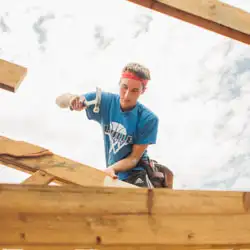
The hammer may be the most visible part of rebuilding. The coordination that makes it possible often happens months earlier.
Stage 6: Long-Term Community Recovery
Typical timeframe: One to several years—or longer
Recovery is bigger than rebuilding houses. A disaster may affect employment, businesses, schools, healthcare, transportation, housing availability, community organizations, churches, social networks, mental health, and the local economy.
Long-term recovery can include housing recovery, economic recovery, infrastructure restoration, community planning, mental health and emotional care, spiritual care, support for vulnerable populations, disaster mitigation, and future preparedness. This work can continue long after the disaster disappears from national attention.
Stage 7: Resilience and Preparation for the Future
One of the final questions of recovery is not simply, “How do we rebuild what was lost?” It is also, “How do we become better prepared for what may happen next?”
Communities may strengthen building codes, improve drainage, relocate vulnerable infrastructure, create emergency plans, develop community networks, improve communications, or reduce future hazards. Recovery can become an opportunity to build greater resilience rather than simply recreate what existed before the disaster.
Where Are Volunteers Most Helpful?
There is no single right answer. Immediately following a disaster, highly trained emergency-response organizations may be needed most. During cleanup, organized volunteer teams can often help remove debris, muck out homes, clear properties, and perform basic repairs. Months later, volunteer construction teams and skilled tradespeople may become extremely valuable.
The important question is not simply, “Where can I go help?” A better question is: “What does this community need right now, and who is coordinating that work?”
Recovery Should Be Locally Led
Every disaster attracts people who want to help. That compassion matters. But affected communities should remain at the center of their own recovery.
Residents, community leaders, emergency managers, Long-Term Recovery Groups, local nonprofits, churches, and other local organizations understand their community in ways outside organizations cannot. Outside organizations are most helpful when they listen first, coordinate with existing recovery structures, and contribute resources to priorities identified locally.
Experience Mission approaches disaster recovery with a simple conviction: communities are partners, not projects. Volunteers enter recovering communities as guests, learners, neighbors, and partners—not as people arriving to rescue a community that cannot help itself.
Recovery Continues After the Headlines Leave
One of the greatest challenges of disaster recovery is that public attention and community need operate on very different timelines. Attention may disappear within days or weeks. Recovery may continue for years.
Some of the greatest opportunities for volunteers, churches, nonprofits, businesses, and donors appear precisely when fewer people are watching. Understanding the stages of disaster recovery helps us recognize that responding to disaster is not a single moment. It is a long journey, and communities often need partners willing to walk with them for the long haul.
FAQs: Stages of Disaster Recovery
How long does disaster recovery take?
Timelines vary widely by disaster and community. Emergency response can last hours to several weeks, cleanup can take days to several months, and rebuilding and long-term community recovery can continue for one to several years—sometimes longer. Recovery is a continuum rather than a fixed schedule, and decisions made in the earliest days can shape how long the full process takes.
What is the difference between disaster relief and disaster recovery?
Disaster relief generally refers to the emergency response stage—protecting life, providing shelter, food, water, and medical care in the hours and weeks after a disaster. Disaster recovery covers everything that follows: damage assessment, cleanup, rebuilding, and the long-term work of restoring housing, economies, and community life, which can continue for years.
What is a Long-Term Recovery Group (LTRG)?
A Long-Term Recovery Group is a coalition of local governments, nonprofits, churches, businesses, and community organizations that forms after a disaster to coordinate resources and identify gaps that insurance and government assistance don’t fully address. LTRGs often work with disaster case managers to help individual households develop recovery plans.
When are volunteers most needed after a disaster?
There is no single stage when volunteers matter most. Trained emergency-response organizations are critical immediately after a disaster; organized volunteer teams become valuable during cleanup and debris removal; and volunteer construction teams and skilled tradespeople are often needed most during the months-to-years-long repair and rebuilding stage.
Why should disaster recovery be locally led?
Residents, community leaders, and local organizations understand their community’s needs, culture, and priorities in ways outside groups cannot. Outside volunteers and organizations are most helpful when they listen first, coordinate with existing local recovery structures like Long-Term Recovery Groups, and support priorities the community has already identified—rather than deciding for the community what it needs.
Sources
This resource draws on disaster-recovery frameworks and practices described by the Federal Emergency Management Agency (FEMA), National Voluntary Organizations Active in Disaster (National VOAD), and other disaster-recovery organizations, together with Experience Mission’s field experience in disaster cleanup and long-term rebuilding.
Disaster timelines vary significantly. The stages and timeframes above are intended to explain the general recovery process rather than predict the timeline of a particular disaster.
About the Author
Further Reading


Site developed and hosted by Skycog, Inc.