Why Does Disaster Recovery Take So Long?
Updated: September 2026
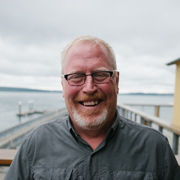 Chris Clum
Founder/Executive Director, Experience Mission
Chris Clum is the founder of Experience Mission, drawing on more than four decades of experience developing service-learning mission trips and working with local ministry partners. This article reflects Experience Mission's organizational approach to service-learning mission trips and was reviewed by the Experience Mission leadership team.
Chris Clum
Founder/Executive Director, Experience Mission
Chris Clum is the founder of Experience Mission, drawing on more than four decades of experience developing service-learning mission trips and working with local ministry partners. This article reflects Experience Mission's organizational approach to service-learning mission trips and was reviewed by the Experience Mission leadership team.
Why does Disaster Recovery take so long?
Disaster recovery takes months or years because rebuilding a house is only one part of helping a family and community recover. Damage has to be assessed, insurance and government assistance take time to navigate, temporary housing and construction capacity grow scarce, and local organizations must coordinate volunteers, funding, and repairs, often while recovering from the same disaster themselves.
The disaster happened six months ago. Why haven't the houses been rebuilt? It is an understandable question.
From the outside, rebuilding can appear relatively straightforward. A home was damaged. Volunteers are willing to help. Donations have been collected. Construction crews know how to build houses. So, why isn't everything repaired yet?
Because rebuilding a house is only one part of helping a family and community recover.
Recovery touches almost every part of daily life. Families may be navigating issues with housing, insurance, finances, contractors, permits, damaged roads or utilities, and hard decisions about what comes next. Local organizations try to help while often facing the same disruptions themselves. That is why recovery can take months or, after large disasters, years.
The Emergency Is Only the Beginning
The first days following a disaster receive the most attention. Emergency crews respond. News organizations arrive. Shelters open. Donations arrive. Volunteers begin asking how they can help.
But emergency response and long-term recovery are different kinds of work. Once the immediate danger passes, communities face slower questions: What was damaged? Which community members still need help? What resources are available? What can be repaired, and what will require rebuilding?
1. The Damage Has to Be Understood
Before recovery organizations can determine what needs to happen, they need to understand the scope of the disaster. That can involve assessing homes, businesses, roads, utilities, schools, churches, farms, public buildings, water systems, transportation, and community infrastructure.
A damaged home may look straightforward from the outside but contain structural, electrical, plumbing, mold, foundation, or environmental problems. These assessments take time, but rebuilding without understanding the damage can create bigger problems later.
2. Every Household Has a Different Recovery Story
Two houses standing next to one another may experience the same flood or tornado and have completely different paths to recovery.
One homeowner may have adequate insurance. Another may be underinsured or uninsured. One household may have savings, while another lives paycheck to paycheck. Some households include elderly residents, people with disabilities, renters, children, or people with limited transportation.
We have learned repeatedly in disaster work that two families can live next door to each other, experience the same storm, and need very different kinds of help.
3. Insurance and Assistance Take Time
Before charitable organizations know what unmet need remains, households may first need to work through insurance and available government assistance. That can involve insurance claims, inspections, documentation, appeals, FEMA assistance, other government programs, loans, local assistance, and nonprofit resources.
These systems exist for important reasons, but they take time to navigate. Sometimes the resources available still do not cover the full cost of recovery. The difference between what a household needs and what existing resources can provide is often called an "unmet need."
4. Housing Becomes a Major Challenge
People cannot simply put their lives on hold while their homes are repaired. They need somewhere to live.
After a large disaster, hundreds or thousands of households may suddenly be looking for temporary housing at the same time. Hotels fill. Rental availability shrinks. Prices increase. Families may move in with relatives or relocate outside the community entirely.
Housing recovery is therefore not simply about rebuilding damaged homes. It is also about helping people remain stable while rebuilding takes place.
5. The Entire Construction System Becomes Overloaded
Imagine thousands of homes in the same region needing repairs at the same time. Suddenly everyone needs roofers, electricians, plumbers, carpenters, HVAC technicians, engineers, inspectors, contractors, and building materials.
A community's normal construction capacity was not designed to rebuild hundreds or thousands of homes at once. Contractors can get booked solid. Materials can become harder to obtain. Prices can rise. Inspections and permits accumulate. Even families with money and insurance may have to wait for available resources to catch up.
6. Rebuilding Requires More Than Volunteers
Volunteers can contribute enormously to disaster recovery. But volunteers cannot solve every part of rebuilding.
Someone still needs to identify the project, determine whether the homeowner qualifies for assistance, assess the house, create a scope of work, obtain materials, secure permits, supervise the work, and provide tools. If volunteers are traveling into the community, someone may also need to arrange lodging, meals, transportation, scheduling, and coordination to keep those volunteers effective.
The limiting factor is not always finding people who want to help. The harder part can be having local partners, ready projects, supervision, materials, tools, and housing in place so volunteers actually reduce the burden rather than add to it.
7. Communities Have to Build Recovery Organizations While Recovering
Local churches, nonprofits, community leaders, businesses, and government agencies may all be affected by the same disaster. Staff members may have damaged homes themselves. Local organizations may lose offices, equipment, volunteers, or revenue.
At the same time, these organizations are suddenly expected to coordinate enormous new needs. Communities may form Long-Term Recovery Groups (LTRGs) to bring local organizations, nonprofits, faith communities, government agencies, businesses, and disaster-recovery organizations together.
Building those relationships and systems takes time. But coordination matters. Without it, organizations can duplicate work in some places while completely missing needs elsewhere.
8. Funding Does Not Arrive All at Once
People often hear that millions, or even billions, of dollars have been allocated after a disaster and understandably wonder why rebuilding is not happening faster.
But disaster funding comes through many different programs. Some funding goes to infrastructure. Some goes directly to households. Some requires applications or matching funds. Some is distributed through state or local governments. Some comes from insurance. Some comes from charitable organizations.
Funding announcements and the arrival of usable resources are not always the same.
9. Communities Are Rebuilding More Than Houses
A disaster can disrupt much more than homes. Businesses may close. Schools and healthcare services may be interrupted. Roads and utilities may need repair. Affordable housing may become harder to find. Churches and community organizations may lose facilities. Families may be carrying grief, financial pressure, displacement, and major changes to daily life.
That is why recovery is about more than construction. It is also about people being able to work, learn, worship, care for family, reconnect with neighbors, and feel rooted in their community again.
10. Some Decisions Should Not Be Rushed
Sometimes rebuilding exactly what existed before the disaster is not the wisest choice. Communities may need to ask: Should homes be rebuilt in the same location? Should building standards change? What should be improved? Should infrastructure be relocated? How can vulnerable residents be better protected? How can the community reduce the impact of the next disaster?
These questions can slow rebuilding in the short term while creating a safer and more resilient community in the future.
The Recovery Gap
Disaster recovery often includes a moment that receives far less attention than it deserves. Emergency organizations begin leaving. News coverage disappears. Donations decline. Volunteers assume the work must be finished. But local recovery organizations are just beginning to understand the households and projects that may require long-term assistance.
This creates a difficult gap:
"Public attention is fading just as long-term recovery needs are becoming clear."
This is often when staying connected matters most. The emergency may be over, but families and local organizations can still be carrying the work every day.
Why Long-Term Volunteers Matter
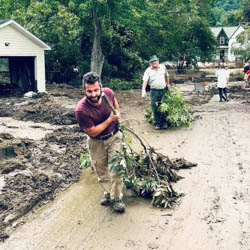
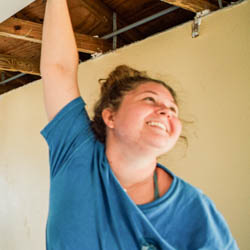
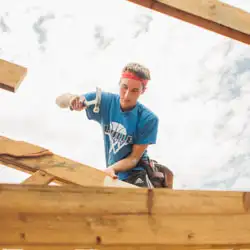
Volunteer teams are often most valuable not only during the dramatic first days after a disaster, but during the months and years that follow. Organized volunteers can help repair homes, rebuild houses, install drywall, paint, repair roofs, complete accessibility projects, clear remaining debris, support local recovery organizations, and provide skilled construction assistance. A community may no longer be in the news, but that does not mean the recovery is over.
Recovery Moves at the Speed of People
Perhaps the most important thing to remember is that disaster recovery is not primarily about buildings. It is about people. A damaged house is a construction project. A family recovering from disaster is not.
People have to make decisions about homes, finances, employment, children, health, memories, neighborhoods, and futures, often while carrying grief and uncertainty, which deserves patience and understanding.
At Experience Mission, we believe communities should lead their own recovery. Outside organizations can bring volunteers, funding, skills, tools, relationships, and other resources, but we do not get to decide what recovery should look like or how quickly it should happen.
Our role is to serve alongside the people already leading, and to bring volunteers and resources when they are actually useful. We have learned that some of the most meaningful opportunities to serve come later, when a community is no longer in the headlines, but the work of recovery is still very real.
Sources and Further Reading
This resource draws on disaster-recovery guidance from the Federal Emergency Management Agency (FEMA), the U.S. Department of Housing and Urban Development (HUD), National Voluntary Organizations Active in Disaster (National VOAD), and Experience Mission's field experience in disaster cleanup and long-term rebuilding.
Every disaster and community is different. Recovery timelines depend on the type and scale of the disaster, housing conditions, insurance, available funding, local capacity, contractors, infrastructure, government programs, and the priorities of affected residents and communities.
FAQs
Why does disaster recovery take so long?
Rebuilding a home is only one part of recovery. Communities must assess damage, navigate insurance, secure housing, and rebuild construction capacity, often while local organizations recover from the disaster too.
What is a Long-Term Recovery Group (LTRG)?
A Long-Term Recovery Group is a coalition of local governments, nonprofits, and churches that forms after a disaster to coordinate resources and address needs assistance programs do not fully cover.
Why are volunteers still needed months or years after a disaster?
Volunteers matter throughout recovery, not just right after. Skilled tradespeople and construction volunteers are often needed most during the months or years of rebuilding that follow.
Why does Experience Mission let communities lead their own recovery?
Local leaders understand a community's needs better than outsiders. Experience Mission serves alongside those leaders, bringing volunteers and resources to support priorities the community has identified.
About the Author
Further Reading


Site developed and hosted by Skycog, Inc.