 1-Month Uganda Mission Trip
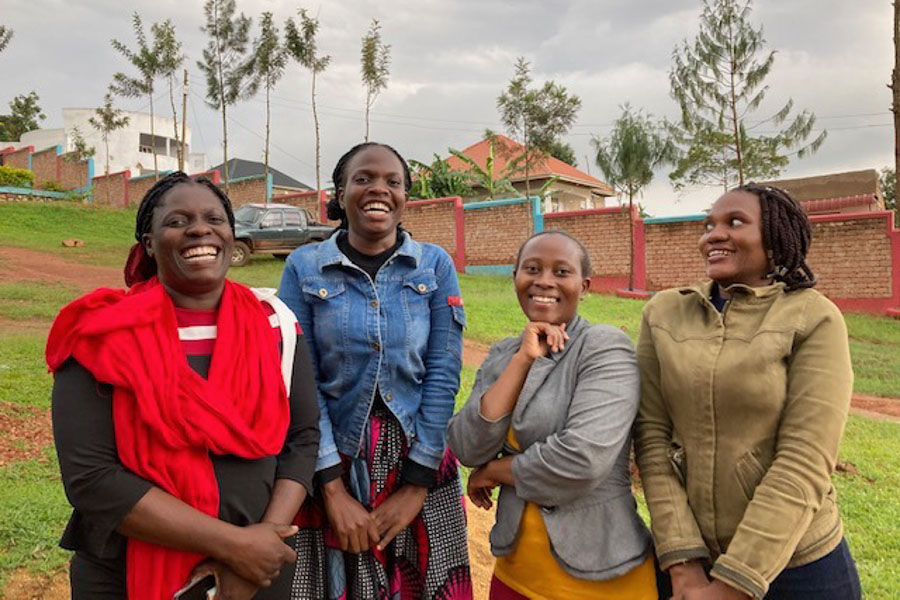


Serve alongside Another Hope Children's Ministries in Uganda
Join Experience Mission (EM) for the 1-month Uganda IMMERSION program, a service-learning mission trip for young adults ages 18 to 30. From May 17 to June 17, 2027, a team of 7 to 12 will live together in Wakiso District, near Kampala, and serve alongside Another Hope Children's Ministries. Trip cost of $5,750 includes all international flights and visas.
MOREUpcoming Trips

 Wakiso District (near Kampala), Uganda
 $5,750 (USD)
 Ages 18-30
upcoming program is the right fit for you!
Trip Details

Communities
What to Expect
What will my team do in Uganda?
Your team serves alongside Another Hope Children's Ministries in Wakiso District, near Kampala, from May 17 to June 17, 2027. Past teams have served in these ways, depending on what Another Hope needs when you arrive:
- Children's home - Helping with daily tasks, homework, and spending time with the kids
- The farm - Caring for livestock and crops
- Local schools - Assisting teachers in elementary classrooms, helping with reading clubs and sports, and renovating classrooms
- Vocational school - Learning and working alongside young adults
- Clean water project - Helping build water containers for the community and surrounding areas
Schedules and ministry projects change, and not every activity happens on every trip. Team members need flexibility and a willingness to adjust.
What does the month include?
Before you leave, your team gathers for a 4-day training retreat in the United States, and the program ends with a group debrief. In between, your team of 7 to 12 young adults lives and serves together in Wakiso, splitting time about equally among service, cultural immersion in daily life, and relationship building with community partners and host families. On top of that, teams spend time together, learning and debriefing each week, as they seek to grow in their faith and explore what God has for them in this season of their lives.
What is IMMERSION?
What is IMMERSION?
IMMERSION is EM's service-learning missions program for young adults, with teams serving alongside community partners for 1 to 9 months. Team members step outside the normal rhythm of their lives to gain a broader picture of the world around them, the way God works in that world, and the value of relationships and quality service alongside people whose lives are just as valuable as their own.
What does "how we do it" mean?
IMMERSION focuses on how we do international ministry and service, not only on what we do. Our central focus is authentic relationships as the keystone of healthy ministry, and what it means to love our neighbor. Teams spend their time equally split among service opportunities, cultural immersion in the community, and relationship building with community partners and host families. That leaves plenty of space to give your time and attention to others, which is essential to doing missions well, as people matter more than any projects we hope to complete. Explore EM's approach to missions.
How is one month different from a longer IMMERSION program?
A 1-month program fits easily between school terms or jobs, while longer IMMERSION programs give you more time in one or more communities. Compare all IMMERSION programs, look at the 3-month Summer Namibia program, or explore all mission trips to Africa, including 12-day group trips.
Uganda Ministry Partners
Who will I serve alongside in Uganda?
Daniel and Ruth Kasozi founded Another Hope Children's Ministries in Wakiso District, near Kampala. Their vision is for the ministry to become self-sufficient, so it can keep caring for children and supporting its community.
Another Hope already runs the work your team joins year-round, including a children's home, a farm, and programs in local elementary schools and a vocational school. Your team comes alongside their work, encouraging them in ministry and following the lead of Daniel, Ruth, and their staff, who know the community and set the daily plans.
Housing & Travel
Where will I live, eat, and stay in touch?
Your team lives together in the guest house on Another Hope's property in Wakiso District. The house has bunk beds with mosquito nets, bathrooms, and showers. All meals and in-country transportation are included in the trip cost. Expect local staples such as matoke (steamed plantains), luwombo (steamed meat in banana leaves), and groundnut stew.
Wifi is available but limited, so plan to contact friends and family on weekends. Daniel and Ruth also arrange time to explore the area. The equator is close, so you may get the opportunity to stand in both hemispheres at once!
How do team members get to Uganda?
Team members fly into Entebbe International Airport, near Kampala. EM books flights on behalf of your team, being sure to avoid the DRC (where current health crises make it too risky to pass through), and checking each connection against CDC's current list of Ebola-affected countries. EM also arranges visas for every team member. All international flights and visas are included in the trip cost.
Participant Requirements
Who can apply to the Uganda IMMERSION program?
The Uganda program fits young adults between the ages of 18 and 30 who are:
- Interested in faith and service - Curious about how faith in Jesus and serving others connect in tangible ways
- Flexible - Ready for schedules and projects that change
- Relational - Eager to talk with locals and build relationships
- Physically ready - Able to do physical work such as construction, farm work, and painting
- Teachable - Willing to follow local norms and safety guidelines and to work through conflict among your team or with community partners
Youth under 18 do not go on IMMERSION trips. Every team member must also complete an IMMERSION application, have a video interview with IMMERSION staff, and pass a criminal background check. Get started by submitting an interest form!
Cost & Refund Policy
What does the trip cost, and what does it cover?
The 1-month Uganda IMMERSION program costs $5,750 per person. The cost covers:
- Travel - International flights, baggage fees, and any necessary visas
- In country - Housing, transportation, and food
- Program - Training event and materials, IMMERSION support staff planning and supporting this trip year round, and the cost of a team leader
- Partners - Donations to the local partners and ministries you serve alongside
The cost does not cover travel to your training location or home from the U.S. ending location, immunizations, meals while you travel, any items you need on the packing list, or the Personal Emergency Fund, a debit or credit card with $1,500 available plus $300 in cash that every team member carries in case of a medical issue or an unexpected trip home.
How do the deposit and fundraising work?
Applications for the May 2027 term close December 18, 2026. If you are accepted, your trip deposit is due within 30 days. The initial deposit is $250 unless you join within 120 days of the program date, when the deposit is higher and depends on how close you are to the trip. The deposit is non-refundable, even if EM has to cancel the trip, and you cannot transfer it after 60 days. After you pay your deposit, you receive a personal EM fundraising profile, the IMMERSION Fundraising Guide, and are connected with an EM Fundraising Coach to help you make a fundraising plan. All donations made through EM are tax-deductible in the United States.
What is the refund policy?
The refund timeline works in three steps. If you withdraw more than 90 days before the start date (before February 16 for the 2027 trip), the trip deposit is the only non-refundable part of what you paid yourself. From 90 days out, 50% of your personal contributions are non-refundable, and from 45 days out (April 2, 2027), 100% are. Refunds are available only on this timeline, and donations that others make toward your trip are non-refundable. Withdrawals must be in writing, and the date of your message determines where you fall on the timeline.
If EM cancels the trip, you can switch to a 1-month IMMERSION trip in Namibia or Indonesia during the same dates, subject to availability, or take a credit toward a future IMMERSION term used within 24 months of the original start date. EM does not offer refunds if it has to cancel a trip, and the trip deposit stays non-refundable. Read the full 1-Month IMMERSION refund policy to learn more before you pay your deposit.
Safety Measures
Is a mission trip to Uganda safe?
Uganda carries real risks right now, and no trip is risk-free. As of November 4, 2026, the U.S. State Department rates Uganda Level 4, Do Not Travel, citing crime, health, terrorism, and unrest. Uganda's Ebola outbreak ended in August, while a larger outbreak continues in the nearby Democratic Republic of the Congo (DRC). EM will decide by February 1, 2027 whether the May 2027 trip goes ahead.
What is the Ebola situation near Uganda?
The outbreak is caused by Bundibugyo virus, a type of Ebola virus. The Centers for Disease Control and Prevention (CDC) calls it the second-largest Ebola outbreak on record. In its November 4, 2026 update, CDC reports 10,563 confirmed cases as of November 1, 10,532 of them in the DRC, and no approved vaccine or treatment for this virus. Imported cases have also been reported in Kenya and Nigeria.
Uganda reported 20 confirmed cases and 2 deaths. The last patient left care on July 16, 2026. Uganda's Ministry of Health declared the outbreak over on July 28, and the World Health Organization and Africa CDC announced its end on August 27, after 42 days without a new case. CDC's travel notice for Uganda, last reviewed August 28, 2026, lists Level 2, "practice enhanced precautions," and CDC's November 4 update reports no active cases there.
How far is Wakiso District/Kampala from the areas still affected?
As of November 4, 2026, CDC's highest-level warning covers Ituri and Nord-Kivu provinces in the DRC. In a straight line, Kampala is about 290 km (180 miles) from Bunia, in Ituri, and about 440 km (270 miles) from Goma, in Nord-Kivu. Wakiso District, where your team will stay, adjoins Kampala. The U.S. Embassy in Kampala reported on October 28, 2026 that Uganda keeps its border crossings with the DRC closed, with exceptions for humanitarian and cargo traffic.
How do team members travel?
Team members fly into Entebbe International Airport, near Kampala. EM books every route, avoiding the DRC, and checking each connection against CDC's current list of affected countries. EM also arranges each team member's visa. All international flights and visas are included in the trip cost.
What travel measures apply for Uganda right now?
These measures were in place when EM last checked on November 4, 2026, and would apply to a May 2027 team if they stay the same:
- Arrival screening in Uganda - All incoming travelers complete a Passenger Locator Form and health screening at Entebbe Airport and any land borders (U.S. Embassy, October 28, 2026)
- Closed DRC border - Uganda has closed its border crossings with the DRC, with humanitarian and cargo exceptions (U.S. Embassy, October 28, 2026)
- Crowd limits - Uganda's Ministry of Health has restricted mass gatherings in Kampala and in districts along the DRC border
- Return screening - U.S. citizens who were in Uganda, and not the DRC, in the previous 21 days must land at Dulles, Atlanta, or New York JFK airport for public health screening
- Health monitoring - CDC asks travelers to watch their health for 21 days after leaving Uganda, and to take their temperature and call their health department if symptoms start
- Flight attestation - Passengers on international flights to the United States must attest that they have not been in the DRC in the previous 21 days
- STEP enrollment - Team members are encouraged to enroll in the State Department's Smart Traveler Enrollment Program during training to receive updates from the U.S. Embassy in Kampala if issues were to arise
CDC also recommends staying in the United States and avoiding international and cruise ship travel during the 21-day monitoring period after you return. If these measures are still in place when your team travels, EM staff will walk you through them during trip preparation, including your flight route and your health monitoring after you return.
What if I am not a U.S. citizen?
Return rules differ for team members who are not U.S. citizens. Under current CDC rules, non-citizens who were in Uganda in the previous 21 days cannot enter the United States, including green card holders. EM arranges a separate flight home from Uganda for these team members, and it is covered in the trip cost. Canadian citizens can return to Canada, where the rules posted on November 4, 2026 call for a health assessment on arrival and 21 days of quarantine (through at least November 27, 2026). The exemptions Canada lists, such as crew members, diplomats, and people providing medical care, do not name volunteer service. These rules are likely to change before May 2027, and both countries have extended them in short steps, so ask EM staff before you apply.
What else does the Level 4 advisory cover?
State's Level 4 rating covers more than Ebola. The advisory cites violent crime, which is more common in larger cities and along Uganda's western and northern borders; terrorism, with past targets that include schools, religious venues, and areas tourists visit; and protests that can start with little warning.
Staying safe from crime often comes down to taking precautions about where you go, when, and how. EM's local partners know Wakiso and Kampala well, and they brief your team when you arrive. In case of a medical emergency, IMMERSION team leaders are CPR/First Aid certified and carry trauma medical kits, and EM secures travel medical and evacuation insurance for all team members.
How will EM decide whether the trip goes ahead?
EM will decide by February 1, 2027, giving you 2 weeks to decide whether to stay on the trip before the 90-day 50% non-refundable deadline. We base the decision on whether the U.S. State Department, the CDC, and our local partners judge travel to Uganda safe enough, and we monitor all three closely until then. A Level 4 rating is not an automatic stop, but it means we proceed only if our local partners and staff are confident in the team's safety. EM staff and local partners also complete a safety checklist before making a final decision. If conditions look OK but worsen after EM decides to go ahead, EM would cancel the trip.
EM notifies applicants directly if travel plans change or the trip is canceled. If EM cancels, you can switch to a 1-month IMMERSION trip in Namibia or Indonesia during the same dates, subject to availability, or take a credit toward a future IMMERSION term. Read the IMMERSION refund policy for deposit and credit terms.
We hope conditions keep improving as May 2027 gets closer! These facts can change in either direction, so EM will update this section as often as possible and include the date of the last check.
This section was last checked on November 4, 2026. It reflects each source as of the date shown and may not include newer changes.
Sources: CDC Ebola outbreak situation summary (data as of November 1, 2026); CDC information for returning travelers (October 30, 2026); U.S. Department of State Uganda Travel Advisory (issued June 4, 2026); U.S. Embassy Kampala health alert (October 28, 2026); Government of Canada Ebola border measures (November 4, 2026).
Uganda Trip FAQ
Which vaccines and medicines do I need?
Uganda requires proof of yellow fever vaccination from arriving travelers age 1 and older. CDC also recommends prescription medicine to prevent malaria and lists other vaccines to consider, such as hepatitis A and typhoid. See a travel clinic at least a month before departure, and check the CDC page for Uganda.
Do I need a visa or a passport?
You need a passport that stays valid for 6 months beyond your return date, and Uganda requires a visa. EM secures the correct visas for all participants, so you do not apply on your own, and the cost is included in the trip fee.
How do I raise the money?
Most team members raise some or all of the trip fee through support letters, fundraising events, and online giving. When you join the team, EM connects you with a Fundraising Coach and a personal fundraising profile. The IMMERSION Fundraising Guide and the mission trip cost guide cover costs and fundraising ideas in more detail.
What happens to my payments if the Uganda trip is canceled?
If EM needs to cancel the trip, you can switch to a 1-month IMMERSION trip in Namibia (Africa) or Indonesia (Southeast Asia) during the same dates, subject to availability, or take a credit toward a future IMMERSION term used within 24 months of the original start date. EM cannot offer refunds if it cancels, and the trip deposit is non-refundable. EM notifies applicants directly. If you withdraw, the timeline in the IMMERSION refund policy applies, and withdrawals must be in writing (via email).

Hear from past
IMMERSION team members!
Hear from past IMMERSION team members!

Eden P. 3-Month Belize IMMERSION
Kailene C. 6-Month Africa IMMERSION

Ian O. Costa Rica / Africa Gap Year IMMERSION
Mary A. 3-Month Costa Rica IMMERSION

Erica H. 3-Month South Africa IMMERSION
Is IMMERSION right for you?
Take our 10-question quiz to find out if you’re ready for an experience like IMMERSION!

Take our 10-question quiz to find out if you’re ready for an experience like IMMERSION!


Site developed and hosted by Skycog, Inc.